

Human Capital and Transnational Identity
A migrant community is not defined by distance from its homeland, nor by nostalgia and passivity. In recent years, the millions of Iranians living abroad have evolved into a dynamic, vibrant and influential transnational network that serves as a second identity for the Iranian nation on the global stage.
To understand the vitality of this cross-border community, one must first recognise its greatest strength: its human capital. It is a community of specialists, university professors, entrepreneurs and professionals who, despite being dispersed across Europe and North America, have preserved a deep connection to Iran, its geography and its destiny.
Distance from the homeland has not weakened their cultural authenticity. Instead, it has fostered a renewed sense of patriotism and national consciousness. This transnational commitment brings together both Iran's ancient national identity and its modern civic identity, preserving the country's cultural heritage while serving as a means of defending the rights of Iranians within the country's borders.
A Turning Point in Diaspora Unity
The social uprisings of recent years have marked a profound stage in the evolution of the Iranian diaspora. The nationwide Mahsa movement of 2022 represented the beginning of this political transformation. The defining turning point, however, came with the Revolution of the Lion and the Sun and the bloodshed and brutal killings of 18 and 19 Dey 1404 (8 and 9 January 2026).
Following these events, the Iranian diaspora ceased to be a scattered and sorrowful observer. It emerged instead as a borderless media network and a politically organised force, united by a shared national identity.
At a time when the regime sought to impose silence through a complete internet blackout and violent repression inside Iran, the diaspora stepped forward.
Every Citizen, a Media Outlet
As every Iranian abroad became, in effect, a media outlet, news of the protests and the voices of demonstrators reached international audiences with unprecedented speed. The walls of state censorship were broken.
The true strength of this borderless media network can be seen in the everyday lives of ordinary members of the diaspora.
Somewhere in Europe, an Iranian mother spends her days caring for her family and raising her children. At night she remains awake, following events unfolding inside Iran with equal measures of hope and anxiety. Setting aside the exhaustion of daily life, she sits before a small computer screen to amplify the voices of imprisoned women and men fighting for freedom.
This quiet dedication is not the story of a single individual. It reflects the experience of the diaspora as a whole: Iranians who, while enjoying the security of life abroad, continue to feel a profound responsibility towards their homeland.
Two Fronts of Struggle
The Iranian diaspora fights on two parallel fronts: digital activism and public mobilisation.
In the digital sphere, activists produce committed content that keeps the names of political prisoners and those facing execution in the public eye, increasing the political cost of repression.
In the physical world, the diaspora has organised the largest demonstrations in the history of Iranian migration. Mass gatherings in major cities across the world demonstrated that Iranians are not isolated communities scattered across Western countries, but a single people united by a common cause.
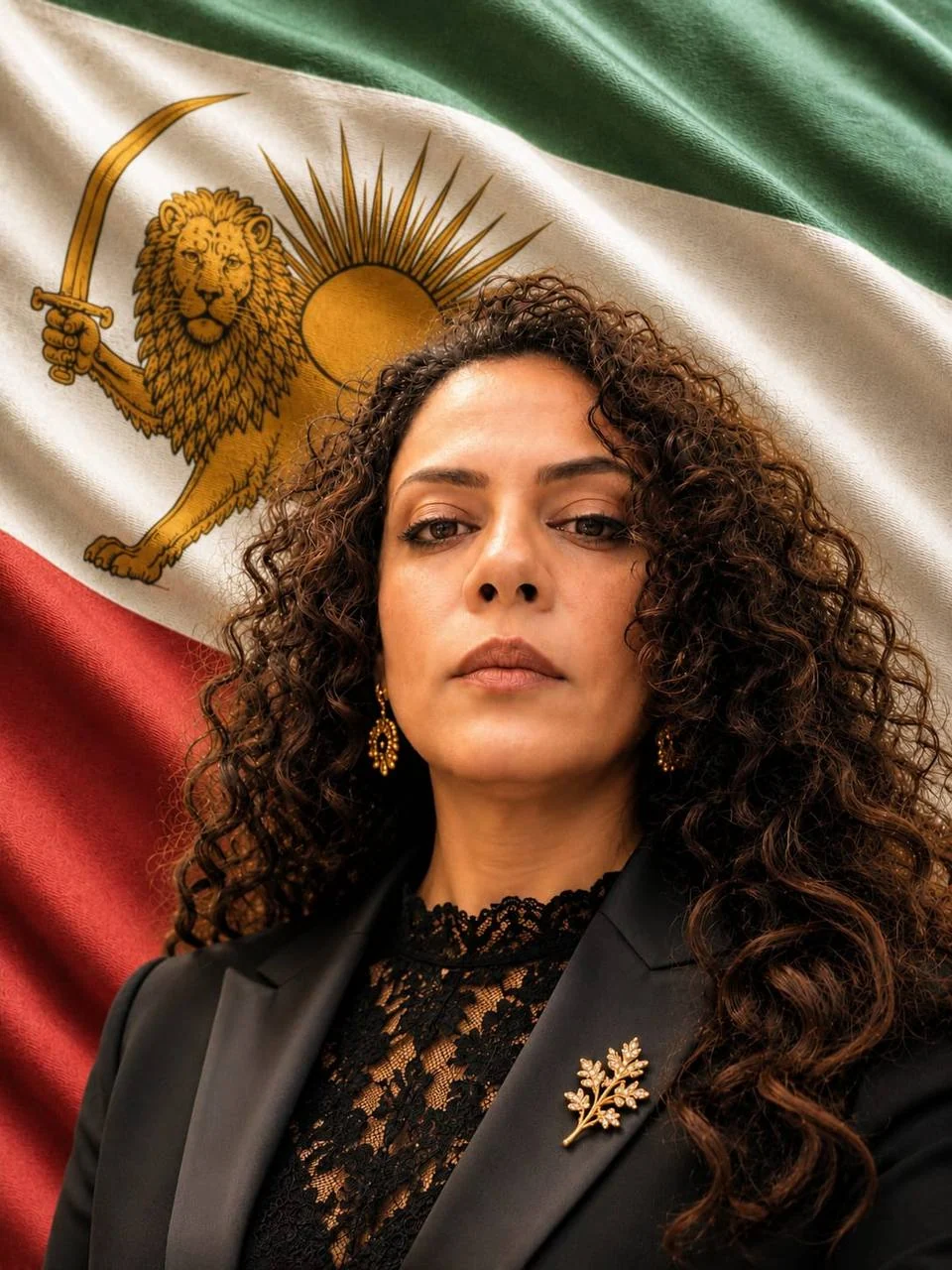
Following the brutal killings of 18 and 19 Dey 1404 (8 and 9 January 2026), the nationalist and monarchist movement led by His Royal Highness The Prince Reza Pahlavi played a central role in organising these demonstrations under the unifying symbol of the Lion and Sun flag. Old divisions gave way to renewed national solidarity and collective purpose.
Digital Citizen Diplomacy
These events demonstrated that, united under a common national symbol, the diaspora possesses an unprecedented capacity to stand alongside those protesting inside Iran. This transnational activism has also developed into a form of digital citizen diplomacy.
Members of the diaspora, each serving as a link in a much larger chain, edit videos, write compelling commentary and repeatedly share the names of compatriots whose lives are at risk. Motivated by a deep love for Iran, they transform social media into a platform of civic resistance.
From Protest to Meaningful Dialogue with the West
The diaspora was once largely confined to protest. Today, it exerts political influence on the governments of its host countries.
Leading figures within this movement, particularly His Royal Highness The Prince Reza Pahlavi, have relied upon a broad social base, a strong national identity and an inclusive patriotism to reshape both the level and quality of engagement with Western governments.
Diplomatic meetings with senior European and Western officials, speeches before parliaments and sustained advocacy within international institutions have produced tangible results. These include the removal of the Islamic Republic from the United Nations Commission on the Status of Women, the establishment of an independent international fact-finding mission to investigate human rights violations, and continuing efforts to designate the regime's repressive institutions as terrorist organisations while expanding international human rights sanctions.
Challenges and the Evolution of Activism
Despite these advances, the political development of the diaspora has not been without challenges. Political polarisation and divisions among certain opposition groups temporarily created confusion within parts of the wider community.
These divisions arose partly from ideological disagreements between some political currents and the broader nationalist movement, and partly from the extensive influence of the regime's cyber operations. Through coordinated disinformation campaigns and thousands of fake social media accounts, the regime sought to encourage division, personal attacks and a politics of retaliation in order to prevent the emergence of a coherent alternative.
The long-term result, however, has not been the weakening of the diaspora, but rather the separation of serious civic engagement from political spectacle. Diaspora professionals, physicians, academics and legal experts increasingly distanced themselves from unnecessary controversy and instead built durable professional networks dedicated to documenting human rights abuses and supporting Iranian civil society.
Meanwhile, the nationalist movement, by preserving the sense of shared identity that reached its height during the Dey 1404 (January 2026) uprising, has remained the principal source of continuity and stability within the broader movement.
A Strong Bridge Between Iran and the World
Ultimately, the Iranian diaspora has demonstrated that geography cannot prevent the fulfilment of national responsibility. Although divisions among some opposition leaders prevented the emergence of a single traditional leadership structure, the wider diaspora has become a conscious national community, a permanent witness and a sustained source of international pressure.
His Royal Highness The Prince Reza Pahlavi and the nationalist movement continue to strengthen this community by emphasising shared identity and national consciousness. As long as this enduring bridge between Iranians inside and outside the country remains intact, and national solidarity continues to resonate beyond Iran's borders, the voices of those protesting within the country will never be silenced by repression or isolation.