
Return to the Roots: The Iranian Nation Against a 1,400-Years-Old Ideology
In recent years, everything has undergone a profound transformation in Iran. From lifestyle to vocabulary, from the manner of celebrating national rituals to the very form of mourning. This evolution is not the will of a leader or an organization. It springs from the very heart of the people. It is not a fleeting reaction to the economic or political situation but a rejection of an ideology imposed for 1,400 years. This ideology sought to dissolve Iranian culture within itself. Today, it collides with the creative and fundamental resistance of the Iranian nation.
The Point of Departure: The Last Wishes of Majidreza Rahnavard
One of the major turning points of this transformation lies in the testament of Majidreza Rahnavard, a young protester executed in December 2022 during the Mahsa uprising. In his final moments, despite terrible pressures, he declared:
"I wouldn't like them to cry over my grave.
I do not want them read the Quran.
Do not perform the prayer.
Be joyful.
Play joyful songs."
These last wishes rapidly spread across social media, acting as the spark for a radical change in mourning rituals. Instead of bowing to Islamic rites, families and protesters turned toward joy, music, dance, and the celebration of life.
"Javidnam" (Immortal) NOT "Shahid" (Martyr)
One of the most striking linguistic changes is the replacement of the Arabo-Islamic term "Shahid" (Martyr) with the Persian word "Javidnam" (Immortal). This word became particularly viral starting in January 2026. Families, independent media, and protesters now use it to honour the memory of the victims.
This semantic evolution is highly significant. The term "Shahid," as exploited by the regime, instrumentalizes death to serve politico-religious goals. Conversely, "Javidnam" emphasizes the immortality of the name and the human legacy, a legacy deeply rooted in pre-Islamic Iranian culture.
It should be emphasized that in the eyes of the great Iranian nation, all compatriots who sacrificed their noble lives to preserve the territorial integrity of the homeland are the Javidnaman (the Immortals) of the country.
The Mothers Demanding Justice
At the heart of this movement, the words and actions of the mothers of the Javidnaman constitute a powerful symbol of this cultural metamorphosis.
The mother of Nima Parsa (a teacher of Italian and English), during the ceremony of the 40th day after her son's death, invited the crowd to applaud warmly instead of reciting funeral prayers (Fatiha). She spoke with pride of her son as a young man who, his entire life, "studied well and taught," to ultimately give his life for Iran.
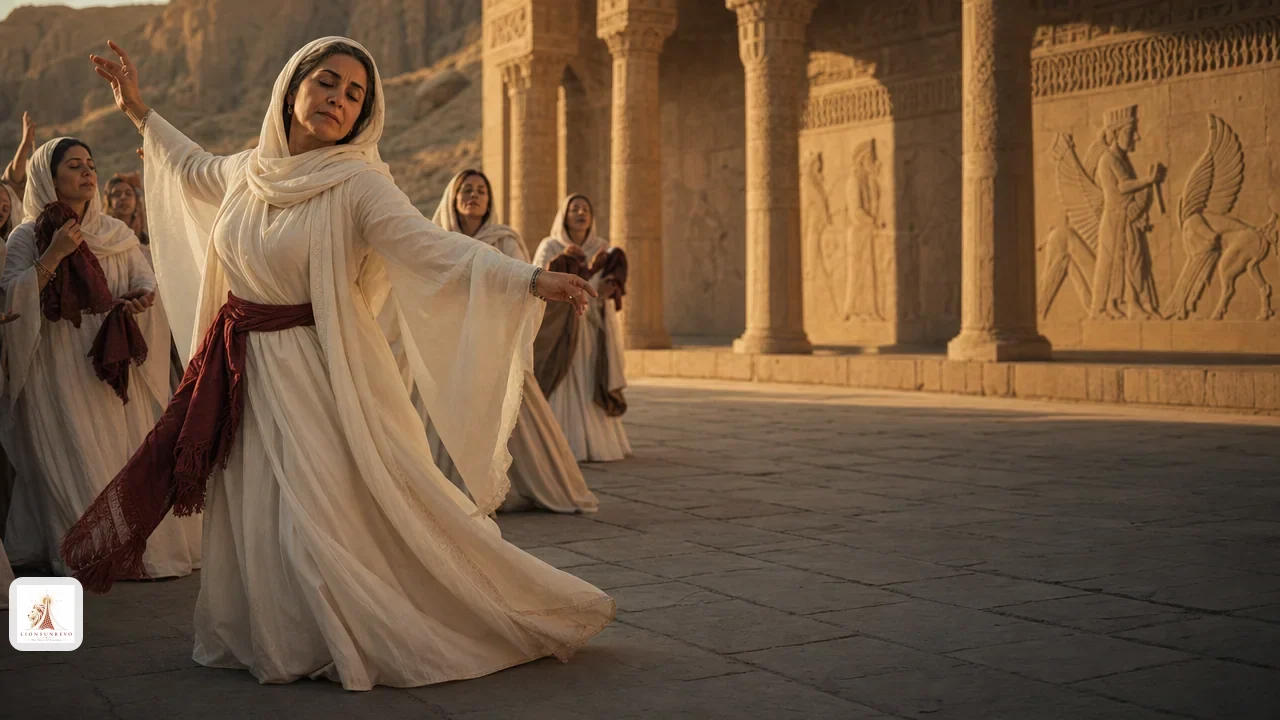
Arshia Barari was a fitness and karate athlete originally from Zanjan. His mother presented herself at the commemorative ceremony dressed in a white robe. In silence, she performed a dance of mourning, a symbolic gesture that found an immense echo.
Today, mourning, is no longer a sign of submission, but the symbol of national pride and cultural resistance.
Mourning Dance and White Clothes
The funerals and commemorations of the Javidnaman are rich with striking images: mourning dances, traditional cries of joy (Kel), traditional music, readings of the Shahnameh (The Book of Kings), and collective jubilation. The "mourning dance" takes its roots in the most ancient Persian traditions. Today, it has become a utility with which to protest. The people refuse to sink into a paralyzing distress. They celebrate life. The message is clear:
"We are still alive and we will not capitulate."
The wearing of white clothes by mothers and relatives is a symbol of purity, resilience, and dignity. It is the rejection of lethargy, silence, and dogmatism.
National Solidarity and Iranian Pluralism
What the Iranian nation demonstrates on a national scale through these protests is solidarity in diversity. During the rallies, individuals of all religions, ethnicities, languages, and regions united: Kurds, Lurs, Balochis, Turks, Persians, Sunnis, Christians, Bahá'ís, and Jews. They stood side by side for Iran.
This unity stands in total opposition to the official ideology of the Islamic Republic, a regime that considers strict adherence to Shiism and absolute submission to the Velayat-e Faqih (the guardianship of the Islamic jurist) as the sole conditions for belonging to society. This popular movement marks a return to the historical pluralism of Iran, where ethnic, religious, and linguistic diversity is not a threat, but a testament to cultural richness and a national treasure.
From December 2017 to Today: The Evolution of a National Insurrection
The protests of December 2017 constituted a major turning point in the movement to reclaim Iranian identity. Slogans such as:
"Iran is our homeland, Cyrus is our father"
"Reza Shah, may your soul rest in peace"
"Neither for Gaza, nor for Lebanon, I give my life for Iran"
"Facing the homeland, Our back to the enemy"
...were a massive "NO" from the Iranian nation to the ideology of the regime. It was an assertive will to restore national identity. This uprising paved the way for the subsequent revolts. The successive waves emerged from the nation itself. The collective wisdom of Iranians, drawing upon the history of Iran, the Persian language, and the Shahnameh, is in the process of redefining its identity.
This popular protest proves that even under fierce repression, Iranian culture remains alive and continues to reinvent itself. As Majidreza Rahnavard rightly said: rather than tears and submission, make way for joy and the continuation of the fight.