

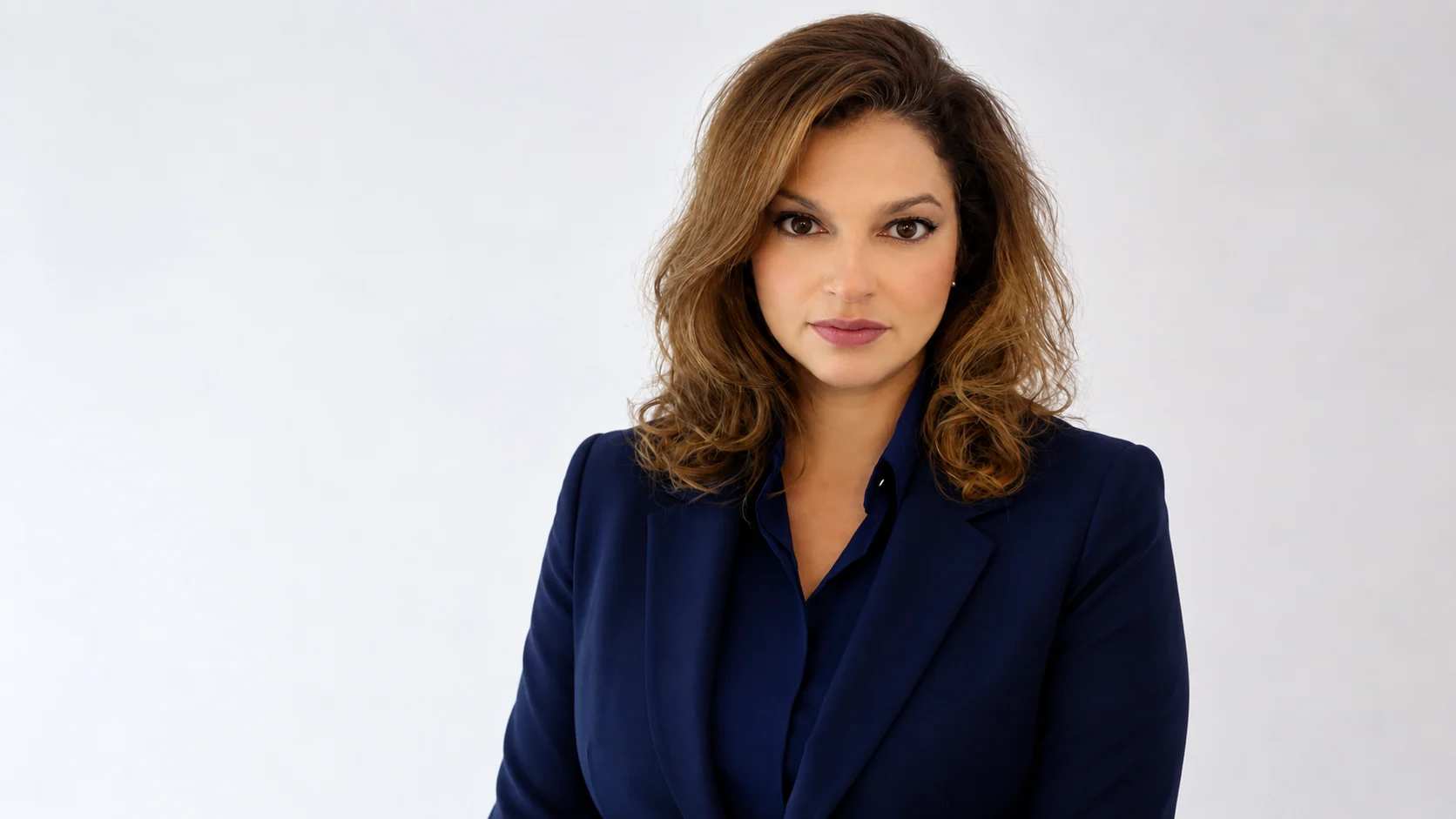
Dr. Nazak Tavakoli: A Professional Voice for Human Rights, Regime Change, and a Democratic Future for Iran
Introduction
Dr. Nazak Tavakoli is a dental surgeon, human rights advocate, and co-founder of the Iranian Association of Human Rights and Allies. Born in 1971 in Iran's northern provinces and raised in Tehran, her personal trajectory spans the turbulence of the 1979 Islamic Revolution, the Iran-Iraq War, political persecution, exile, and a distinguished professional career in Europe. With clinical service in the United Kingdom's National Health Service (NHS) and sustained activism, Dr. Tavakoli combines medical expertise with structured diaspora organizing. As director of key networks, including the Global Iranmadari Network and the National Convergence Network in Britain, she emphasizes organization-building and broad alliances to amplify the voices of Iranians demanding change.
Experience of Living in Iran
Dr. Tavakoli's early life bridged the final years of the Pahlavi era and the profound disruptions that followed the 1979 Revolution. She spent part of her childhood during the Pahlavi period, attending an American school in Tehran and accompanying her father, Mr. Siavash Tavakoli, a company director, on business trips across Iran. These experiences instilled a deep appreciation for the country's modernization efforts at the time.
The Revolution and the subsequent Iran-Iraq War (1980-1988) shattered this trajectory. Her family, deeply involved in politics, faced severe repression. In 1980, her father was imprisoned in the notorious Evin Prison and executed after one year of detention. This tragedy, combined with widespread political purges, ideological control, and wartime hardships, exposed her to the regime's systematic use of imprisonment, torture, and execution. At the age of 15, these realities compelled her to flee Iran in 1985, seeking safety and opportunity abroad. Her story reflects the forced exile of many who witnessed both pre-revolutionary aspirations and the authoritarian realities that followed.
Professional Path and Migration
After emigrating to Sweden in 1985, Dr. Tavakoli lived there for a decade, dedicating herself to education. She studied at the prestigious dental university in Gothenburg, where she qualified as a dental surgeon through rigorous academic training and determination. In 1995, she moved to the United Kingdom, joining the National Health Service (NHS), where she built her clinical career.
A proud mother of twin daughters born in 2007, Dr. Tavakoli notes that her children's interest in law and politics has further strengthened her commitment to human rights. Their perspective reinforces the urgency of addressing ongoing violations in Iran. This personal drive aligned with the nationwide protests that erupted in September 2022 following the death of Mahsa Amini. Witnessing the regime's violent suppression, especially against young protesters, including girls and boys, Dr. Tavakoli co-founded the Iranian Association of Human Rights and Allies. The organization, now with approximately 200 members, focuses on documentation, advocacy, lobbying, and international awareness-raising concerning imprisonment, torture, physical and sexual violence, and executions.
Specialized Analysis: Human Rights and the Imperative of Regime Change
Dr. Tavakoli sees the Islamic Republic's human rights crisis as structural and inherent to the system. As a healthcare professional, she is acutely aware of the physical and psychological consequences of state violence, including sexual violence in detention and the targeting of children and adolescents. Her organization's efforts align with international standards and mechanisms, such as those of the UN Human Rights Council, documenting patterns that may amount to crimes against humanity.
The regime's endurance derives from its ideological framework (velayat-e faqih), parallel security structures (notably the IRGC), and patronage networks. Historical attempts at partial reform or sanctions relief have proven ineffective because they fail to address the fundamental incompatibility between theocratic rule and core principles of individual rights, gender equality, and institutional accountability. Dr. Tavakoli and her colleagues maintain that genuine, sustainable human rights protections in Iran require complete regime change: the replacement of the current order with a secular, democratic system grounded in the rule of law.
This assessment is pragmatic. Diaspora networks play a vital bridging role, relaying information from inside Iran, coordinating advocacy in Western capitals, and forging alliances. The focus on organization-building counters a recurring opposition weakness: fragmentation. By promoting convergence among secular democratic forces, these efforts aim to build a credible framework for managing transition challenges, including security reform, economic stabilization, and justice.
A Free Iran and Its Future
Dr. Tavakoli envisions a post-regime Iran that builds upon its modernizing legacy while confronting contemporary needs. Core elements include:
A secular democratic constitution ensuring freedoms of speech, assembly, religion, and full gender equality.
An independent judiciary and accountable institutions to prevent repetition of past abuses.
Economic reconstruction utilizing Iran's human capital, natural resources, and geographic advantages.
Reintegration into the global community as a constructive actor, free from nuclear proliferation concerns or destabilizing regional policies.
A successful transition would demand inclusive national dialogue, technocratic expertise, and measured international support to avoid vacuums or cycles of retribution. The Iranian diaspora's large professional class, physicians, engineers, academics, and specialists, constitutes a major asset for rebuilding governance, healthcare, infrastructure, and administration.
Perspective on Crown Prince Reza Pahlavi and Constitutional Monarchy
Dr. Tavakoli views Crown Prince Reza Pahlavi as a unifying figure capable of facilitating a stable democratic transition. Her childhood memories of the Pahlavi era underscore the dynasty's transformative impact. Reza Shah rescued Iran from the dysfunction and backwardness of the Qajar dynasty, laying the foundations for a modern nation-state. His son, the Shah of Iran Aryamehr (Mohammad Reza Shah Pahlavi), further modernized the country through extensive infrastructure development (roads, railways, ports), hospitals, schools, and social reforms, including major advances in women's rights and education. These achievements positioned Iran as a rapidly developing nation before the 1979 rupture.
She supports Crown Prince Reza Pahlavi's leadership within a constitutional monarchy framework, a model that offers symbolic national continuity and cohesion while placing executive power in elected democratic institutions. This approach, successfully implemented in several stable democracies, respects Iran's historical and cultural heritage while anchoring the state firmly in secular law and popular sovereignty. For Dr. Tavakoli, this is a forward-looking strategy rooted in realism, not mere nostalgia.
Her advocacy reflects a conviction shared by many professionals and intellectuals in the diaspora: Iran's future lies in harmonizing its rich civilizational legacy with universal democratic norms. Through organized activism, international engagement, and professional expertise, Dr. Nazak Tavakoli continues to advance this vision.