
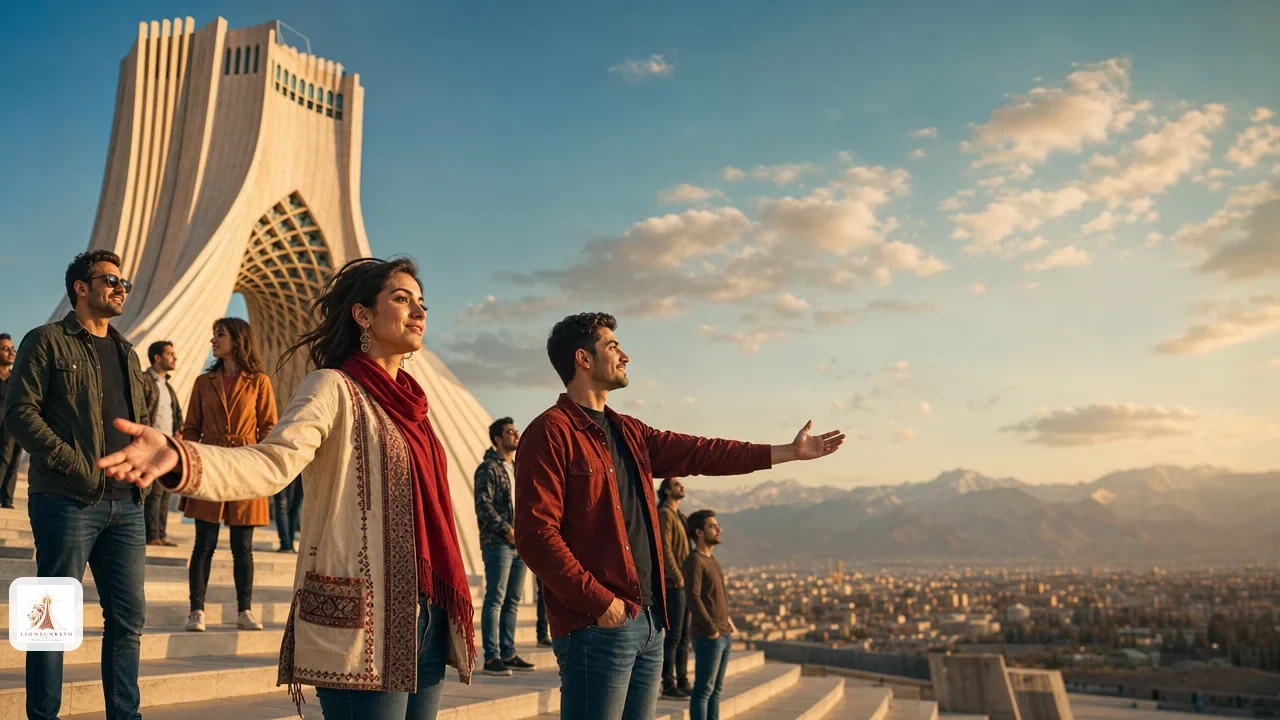
Iranians have always been a warm, hospitable, and lovable people. Iran's millennia-old culture is built upon respect, kindness, Ta'arof (traditional courtesy), and openness to others. From the caravans of the Silk Road that connected East and West, to homes where the aroma of freshly brewed tea and sweets welcomed guests before a single word was spoken, Iran has always sent this message to the world:
"Let us be friends."
This spirit is a core part of our identity. Iranians have never found true meaning in isolation, nor have they ever feared connecting with the world. Throughout history, Iran has been the crossroads of civilizations—a land where ideas, cultures, arts, and people converged to forge mutual friendship and respect.
After the 1979 Revolution, something profoundly valuable was denied to the Iranian people: the freedom to live in peace, friendship, and connection with the world.
Before the revolution, Iran’s doors were wide open to the globe. Iranian students pursued their education at the most prestigious universities in Europe and America. Tourists from all corners of the world flocked to Isfahan, Shiraz, Tehran, and other cities, greeted by the smiles, respect, and hospitality of the locals. Diplomatic relations with many nations were warm and constructive. People forged friendships, married, conducted business with foreigners without fear, and proudly shared their culture and history.
Iranians have never been a warmongering or isolationist people. Our literature, poetry, and history speak, above all, of reconciliation, dialogue, and coexistence. This trait is not merely a social behavior; it is in our blood and embedded in our culture.
With the establishment of the Islamic Republic, this trajectory gradually altered. The foreign policy of the Islamic Republic distanced Iran further from the world day by day. Embassies were shuttered or rendered dysfunctional. Flights dwindled. Sanctions crippled daily life. Slowly but surely, a wall of mistrust rose between the people of Iran and other nations.
The ultimate victims of this shift were ordinary citizens. Generations of young Iranians were stripped of the opportunity to freely explore the world, study without anxiety, engage in commerce, collaborate scientifically, and partake in cultural exchanges. What was taken from them was not just the ability to secure a visa or purchase a plane ticket; it was their natural right to be seen as peaceful, kind human beings who yearn to connect with others.
Alongside this isolation, another factor exacerbated the rift between the Iranian people and the world. Years of political propaganda across many Western media outlets painted a one-dimensional portrait of Iran—an image where the Iranian people were often conflated with the policies of the Islamic Republic. Many who had never met an Iranian in person came to know a country with thousands of years of civilization solely through the lens of political tensions.
The result was a wound that is perhaps seldom spoken of. In many parts of the world, Iranian immigrants, students, and travelers were occasionally met with glances of hesitation, suspicion, or even fear—even though the same enduring spirit of hospitality and friendship remained alive in their hearts. The distance created by politics was gradually felt between individuals, and a wall that should never have been built between nations grew taller and taller.
Yet, the Iranian spirit never surrendered to this separation.
Today, on the streets of Paris, Berlin, London, Stockholm, Toronto, Los Angeles and dozens of other cities, Iranians gather and raise their voices. This voice is not merely a cry of protest. Behind every slogan lies a deeper yearning: the desire for Iran to return to the place it has always deserved; the longing to return to a country that speaks to the world once more, learns from the world, and extends its friendship to the world.
The message of these gatherings is addressed to the entire globe—a simple yet profound message:
"We want to reconcile with the world again."
This desire is not just a political demand; it is a deeply human wish. Iranians want to host tourists once more. They want their children to study at global universities without anxiety. They want their researchers and artists to freely share their culture and art with other nations. They want to be the very bridge they had built between civilizations for centuries.
Over the past 47 years, much has been taken from the Iranian people—opportunities, connections, and years during which they could have thrived alongside other nations. But the one thing no one could ever take from Iranians was their hospitable and peace-loving spirit.
This spirit remains alive in Iranian homes, both inside Iran and in the farthest corners of the earth. Still, when a guest from another land enters an Iranian home, they are welcomed with tea, smiles, and respect. Nowruz still arrives as a harbinger of friendship and renewal. Countless Iranians, regardless of distance and borders, still dream of a day when the world will recognize Iran not through the prism of politics, but through the eyes of its people—a people who have always wished to live with others, not in opposition to them.
That day will come.
The day when the walls of mistrust and propaganda crumble. The day when the people of Iran can extend a hand of friendship to the world without fear of judgment or suspicion—a hand that has been open for friendship for centuries and has never been closed.
We, the Iranian people, have long been a bridge between civilizations. This role has never been erased from our historical memory. If given the chance again, we will become that bridge once more. Not as enemies, but as friends. Not in isolation, but in reconciliation. Not with fear, but with kindness.
It is this very aspiration that now echoes through the streets of Europe and North America and remains alive in the hearts of millions of Iranians, wherever they may be in the world.
Iran has always been ready for friendship.
And perhaps now, more than ever, the world is also ready to recognize this friendship once again.